
HOME

How to improve the angle transmission error of the gearbox

How to improve the angle transmission error of the gearbox

Angular transmission error (ATE) is a core issue in precision gearboxes (especially planetary gearboxes and harmonic gearboxes), directly impacting positioning accuracy, motion smoothness, and noise. Improvements can generally be addressed in the following areas:

 Design Surface Improvement
Tooth Profile Modification

Appropriate tooth tip and root trimming, or crowning, can reduce angular error during gear meshing.

In planetary gears, trimming can balance error accumulation.

Gear Ratio and Module Improvement

Reducing the number of gear stages or selecting gears with a larger module can reduce error accumulation.

A high-tooth-count internal ring gear provides an optimal match for the planet gears, reducing transmission error.

Helical vs. Spur Teeth

Compared to spur teeth, helical planetary gearboxes offer more continuous tooth meshing, resulting in less transmission error and noise, but they introduce axial forces.

They are suitable for applications requiring high precision and low noise levels.

Backlash Control

Use preloaded springs or split gears to eliminate backlash and reduce angular transmission errors.

Harmonic reducers often use wave generators and flexible gears to achieve zero backlash.

 Process and Quality Control
Gear Quality Grade

Use high-precision gears of JIS N5 / DIN 5 grade or higher.

The main sources of error are tooth profile, tooth profile, and cumulative pitch errors.

Bearing Rigidity and Assembly Accuracy

High-rigidity bearings and precision assembly can prevent eccentricity and tilt.

Appropriate preload can improve positioning accuracy.

Casing Rigidity

Insufficient rigidity can cause deformation under load, amplifying angular errors.

Using a one-piece machined structure can effectively improve this.

 Testing and Correction
Error Measurement and Digital Compensation

High-end applications (such as robotics and semiconductor equipment) use laser interferometers to measure error curves, which are then compensated by the controller.

Choose the right reducer type.

Harmonic reducers: High-precision positioning, suitable for small loads and zero backlash requirements.

Precision planetary reducers: Excellent torsional rigidity, suitable for high-torque applications.

RV reducers: Low angular transmission error, suitable for robot joints.

 Summary:
Improving angular transmission error requires a combination of gear design improvements, high-precision manufacturing processes, increased rigidity, and backlash control.
For small error control, tooth profile correction and helical gearing can be used.
For extremely high precision requirements (e.g., <1 arcmin), a combination of high-precision manufacturing, zero-backlash mechanisms, and controller error compensation is required.


Read More
HOME

減速箱的角度傳達誤差需要如何改善

減速箱的角度傳達誤差需要怎麼改善

角度傳達誤差(Angular Transmission Error, ATE)是精密減速箱(特別是行星減速機、諧波減速機等)的核心問題之一,會直接影響定位精度、運動平穩性與噪音。要改善,通常可以從以下幾個方向著手:

🔧 設計面改善

  1. 齒形修整(Profile modification)

    • 適當的齒頂修緣、齒根修緣或鼓形齒修整,可減少齒輪嚙合時的角度誤差。

    • 特別在行星齒輪中,修整可平衡誤差累積。

  2. 齒數比與模數改善

    • 減少傳動級數或選擇大模數齒輪,可降低誤差累積。

    • 高齒數的內齒圈與行星輪匹配更佳,能降低傳遞誤差。

  3. 斜齒 vs. 直齒

    • 斜齒行星減速機相較直齒,齒面嚙合更連續,傳動誤差與噪音更小,但會帶來軸向力。

    • 適用於對精度與低噪聲要求高的場合。

  4. 背隙控制(Backlash control)

    • 使用預壓彈簧或分體齒輪結構(split gear)消除背隙,減少角度傳達誤差。

    • 諧波減速機常用波發生器與柔性齒輪實現零背隙。

⚙️ 製程與品質控制

  1. 齒輪精度(Gear quality grade)

    • 使用 JIS N5 / DIN 5 等級以上的高精度齒輪。

    • 誤差主要來源是齒形、齒向、累積節距誤差。

  2. 軸承剛性與裝配精度

    • 高剛性軸承與精密裝配能避免偏心與傾斜。

    • 適當預壓可提升定位精度。

  3. 箱體剛性

    • 剛性不足會在負載下變形,導致角度誤差放大。

    • 採用一體式機加工結構可有效改善。

🧪 測試與修正

  1. 誤差量測與數位補償

    • 高階應用(如機器人、半導體設備)會透過雷射干涉儀量測誤差曲線,再由控制器進行補償。

  2. 選用合適的減速機型式

    • 諧波減速機:高精度定位,適合小負載、零背隙要求場景。

    • 精密行星減速機:扭轉剛性佳,適合高扭矩應用。

    • RV減速機:角度傳達誤差低,適合機器人關節。

👉 總結:
改善角度傳達誤差,需要 齒輪設計改善 + 高精度製程 + 剛性提升 + 背隙控制 的綜合手段。
如果是 小幅誤差控制,可透過齒形修整與斜齒改善;
如果是 極高精度需求(例如 <1 arcmin),則需結合 高精度製造 + 零背隙機構 + 控制器誤差補償


Read More
HOME

How to estimate the service life of the gearbox

How to estimate the service life of the gearbox

When estimating the service life of a gearbox, the engineering community usually uses calculation formulas based on rolling bearing life theory (such as L10 life) and gear life theory. The following are the two main methods:

1. Rolling bearing L10 life formula (commonly used in gearboxes)
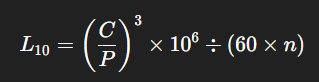
L10 life refers to the minimum life that 90% of mechanical components can achieve (expressed in hours):


2. Gear life prediction (based on fatigue life)
The life of a gear is mainly determined by **tooth surface fatigue (pitting) and tooth root fatigue (fracture)**. The following theories are commonly used for prediction:


L10: Expected life (hours)
C: Rated dynamic load of the bearing (kN)
P: Equivalent dynamic load (kN)
n: Speed (RPM)

This formula assumes normal operating conditions and proper lubrication.


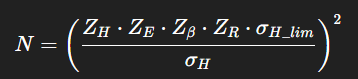
Tooth surface fatigue life calculation (simplified formula):
N: number of cycles that can be tolerated
σH: actual tooth surface contact stress
σH_lim: tooth surface fatigue limit stress
Zh, Ze, Zβ, Zr: correction factors (considering tooth shape, material, lubrication, load, etc.)
🛠 Common practices in practice:
Use life charts or data provided by manufacturers
They often provide life estimates under different loads and speeds based on the above theory and test data.
Use ISO standard formulas
Such as ISO 6336 (for gears) and ISO 281 (for rolling bearings) for life estimation.


Read More
HOME

如何預估減速機(Gearbox)使用壽命

如何預估減速機(Gearbox)使用壽命

預估減速機(Gearbox)使用壽命時,工程界通常會使用基於滾動軸承壽命理論(如L10壽命)和齒輪壽命理論的計算公式,以下是主要的兩種方式:

1. 滾動軸承的 L10 壽命公式(常用於減速機)

L10 壽命是指 90% 的機械元件能夠達到的最小壽命(以小時表示):

  • L10:預期壽命(小時)
  • C:軸承的額定動載荷(kN)
  • P:等效動載荷(kN)
  • n:轉速(RPM)

此公式假設工作條件正常、潤滑得當。

⚙️ 2. 齒輪壽命預估(以疲勞壽命為基礎)

齒輪的壽命主要由**齒面疲勞(點蝕/pitting)齒根疲勞(斷裂)**來決定。預估常用以下理論:

齒面疲勞壽命計算(簡化公式):

  • N:可承受的迴轉數(cycles)
  • σH:實際齒面接觸應力
  • σH_lim:齒面疲勞極限應力
  • Zh,Ze,Zβ,Zr:修正係數(考慮齒形、材料、潤滑、承載等)

🛠 實務上常見的做法:

  1. 使用製造商提供的壽命圖表或資料
    他們常根據以上理論搭配測試資料,提供不同載重與轉速下的壽命預估。
  2. 利用 ISO 標準公式
    如 ISO 6336(針對齒輪)與 ISO 281(針對滾動軸承)進行壽命預估。
Read More
HOME

High strength TRB142 series (maximum input motor 6KW)

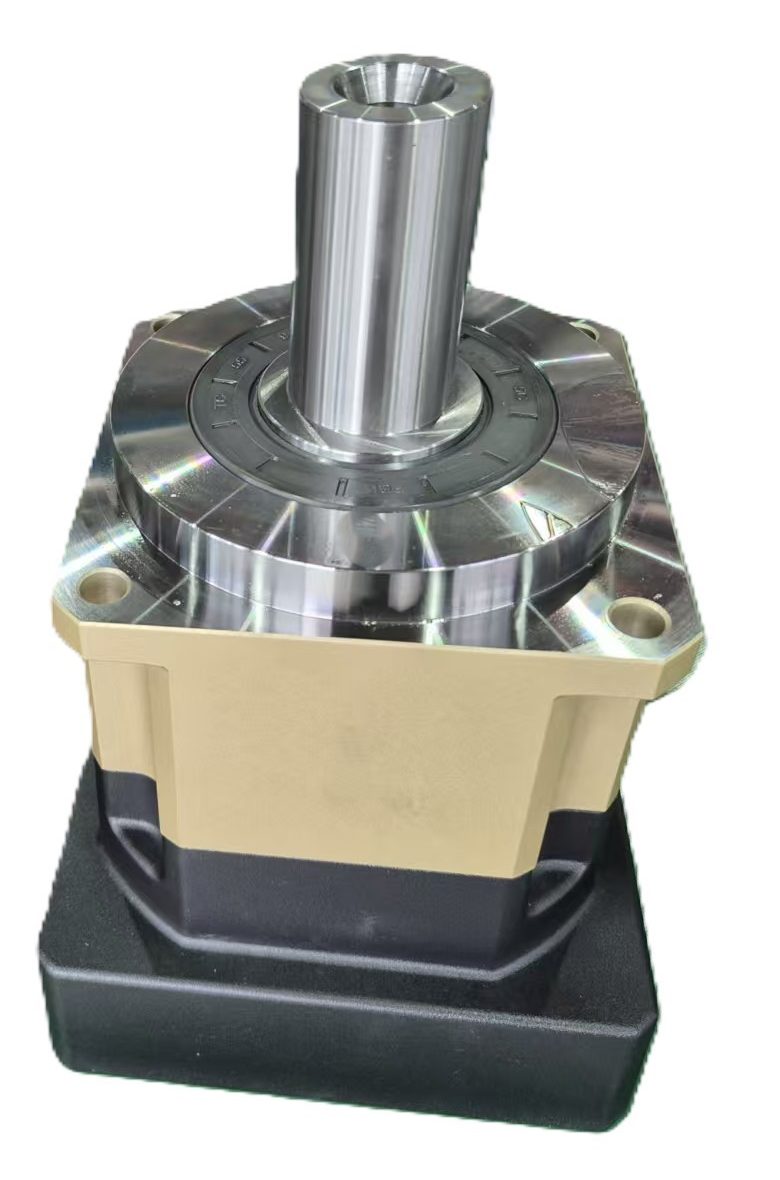
High strength TRB142 series (maximum input motor 6KW)


Typical application equipment and installation locations
Machine tools and CNC machining centers: used for spindles or feed axes, providing high-precision positioning and stable torque output.
Automation equipment and robotic arms: installed on joints or end effectors to achieve precise motion control.
Semiconductor and PCB manufacturing equipment: used for handling, alignment or high-speed transmission modules to ensure micron-level accuracy.
Automatic warehousing and logistics systems: used for conveyor belts, lifting modules, etc., to support high loads and long-term execution.

TRB series has the following features
High precision and low backlash: The backlash can reach 1 minute, which is suitable for precision positioning needs.
High rigidity and high torque: The allowable average torque range is 50~360Nm, the maximum can reach 700Nm, and it can withstand 1250Nm in emergency situations.
High-speed input capacity: The allowable average input speed is 2000~3000rpm, and the maximum can reach 6000rpm.
High load bearing capacity: The allowable radial load is 890~4700N, and the axial load is 1100~4100N.
Silent and maintenance-free design: High-precision gear grinding technology is used to reduce noise and vibration, and it has the characteristics of no oil leakage and easy maintenance.

Copy Right @WINTEC trans-technology  Co.,Ltd 

Right Reserve

Read More
HOME

高強度 TRB142系列(最大輸入馬達 6KW)

高強度 TRB142系列(最大輸入馬達 6KW)

             典型應用設備與安裝位置

  • 工具機與 CNC 加工中心:用於主軸或進給軸,提供高精度定位與穩定扭矩輸出。
  • 自動化設備與機械手臂:安裝於關節或末端執行器,實現精密運動控制。
  • 半導體與 PCB 製造設備:應用於搬運、對位或高速傳輸模組,確保微米級精度。
  • 自動倉儲與物流系統:用於輸送帶、升降模組等,支援高負載與長時間執行。
  • TRB 系列具備以下特性

  • 高精度與低背隙:背隙可達 1 分,適合精密定位需求。
  • 高剛性與高扭矩:容許平均扭矩範圍為 50~360Nm,最大可達 700Nm,緊急情況下可承受 1250Nm。
  • 高速輸入能力:容許平均輸入轉速為 2000~3000rpm,最高可達 6000rpm。
  • 高負荷承受力:容許徑向負荷為 890~4700N,軸向負荷為 1100~4100N。
  • 靜音與免維護設計:採用高精度磨齒工藝,降低噪音與振動,並具備不漏油與維護方便的特性。

Copy Right @WINTEC trans-technology  Co.,Ltd Right Reserve

Read More
HOME

Reducer in electronic wafer processing

Reducer in electronic wafer processing

1. Wafer transfer system
Wafer transport systems are needed to move wafers from one processing step to another, and these processes require extremely high precision and stability to avoid wafer damage. Reducers are used in wafer transfer robotic arms to provide precise motion control, ensuring that the wafer can maintain a stable and accurate positioning during the transfer process and avoiding damage to the wafer surface caused by vibration.


2. Wafer grinding and polishing equipment
In the wafer processing of semiconductor manufacturing, grinding and polishing are one of the key processes. These processes require equipment that can provide very stable low-speed, high-torque motion to achieve fine surface treatments. Planetary reducers are used in grinding and polishing equipment to ensure stable rotation and uniform movement of wafers during processing, thereby improving the surface finish of the wafers and reducing the defect rate.


3. Wafer cutting equipment
Wafer dicing is the process of cutting large wafers into small chips in semiconductor manufacturing. This process requires extreme precision to ensure the accuracy and uniformity of the cuts. Planetary reducers are used in the drive system of the cutting machine to provide stable movement and high torque output to ensure that the cutting tool can remain stable during execution and reduce stress on the wafer to avoid damage.


4. Lithography Equipment
Photolithography equipment is one of the core technologies in semiconductor manufacturing and is used to etch tiny circuit structures on the surface of wafers. Lithography machines require precise motion control to ensure that the position of the wafer corresponds precisely to the optical system. The reducer is used in the mobile platform and positioning system of the lithography machine to provide high-precision motion control, ensuring accurate alignment of the wafer and the light source, thereby improving the accuracy and consistency of circuit etching.


5. Wafer loading and unloading equipment
Automated wafer loading and unloading systems need to ensure stability and precision during wafer handling to avoid collision or damage. Planetary reducers are used to drive these automated equipment, ensuring that wafers can be smoothly and accurately loaded into each process and safely removed and installed after processing, thereby improving production efficiency and reducing human errors.


6. Wafer inspection equipment
After going through multiple manufacturing processes, wafers need to be inspected in detail to ensure that their surfaces are defect-free and meet process standards. Wafer inspection equipment uses planetary reducers to drive precision mobile platforms that can adjust the position of the wafer with micron-level accuracy to ensure that the inspection instrument can perform a comprehensive inspection of each wafer.


7. Etching and deposition equipment
During the etching and deposition processes in wafer manufacturing, the wafer needs to be rotated to evenly distribute the material or gas. Planetary reducers are used in the rotating mechanisms of these devices to provide stable and precise motion, ensuring that materials can be evenly deposited on the wafer surface, thereby improving product quality and manufacturing accuracy.


8. Wafer storage and handling system
In a semiconductor manufacturing plant, wafers need to be transported and stored between different equipment. These handling systems usually require fast and smooth movements without causing any damage to the wafers. Planetary reducers can provide high-precision and stable drive, supporting the efficient and safe operation of automated storage and handling systems.


9. Semiconductor packaging equipment
After wafer processing is completed, semiconductor components need to be packaged. Packaging equipment involves delicate welding, cutting, testing and other operations. Planetary reducers provide stable drive and high-precision control for these devices, ensuring that each component can be processed accurately and reducing errors and scrap rates in the packaging process.


10. Semiconductor testing equipment
Test equipment is needed to perform functional tests on each chip and ensure that its performance meets specification requirements. These devices require precise control of the movement of each test probe to ensure that each test point is accurately contacted. The planetary reducer can provide high-precision drive to ensure stability and accuracy during the test.

Read More
HOME

行星減速機在電子晶圓加工中的具體應用

行星減速機在電子晶圓加工中的具體應用:

1. 晶圓傳輸系統

晶圓傳輸系統需要將晶圓片從一個加工步驟移動到另一個步驟,這些過程要求極高的精確性和穩定性,以避免晶圓損壞。減速機被應用於晶圓傳輸機械臂中,提供精確的運動控制,確保晶圓在傳輸過程中能夠保持穩定且準確的定位,並避免震動對晶圓表面的損傷。

2. 晶圓研磨與拋光設備

在半導體製造的晶圓加工過程中,研磨與拋光是關鍵的工序之一。這些工序要求設備能夠提供非常穩定的低速高扭矩運動,以實現精細的表面處理。行星減速機應用於研磨和拋光設備中,確保加工過程中晶圓的穩定旋轉和均勻運動,從而提高晶圓表面光潔度,並減少缺陷率。

3. 晶圓切割設備

晶圓切割是半導體製造中將大塊晶圓切割成小塊晶片的過程。該過程需要極高的精度來確保切割的準確性和均勻性。行星減速機應用於切割機的驅動系統中,提供穩定的運動和高扭矩輸出,以確保切割刀具在執行過程中能保持穩定,並減少對晶圓的應力,避免損壞。

4. 光刻設備

光刻設備是半導體製造中的核心技術之一,用於在晶圓表面上刻蝕微小的電路結構。光刻機需要精密的運動控制來確保晶圓的位置精確對應光學系統。減速機應用於光刻機中的移動平臺和定位系統,提供高精度的運動控制,確保晶圓與光源的準確對位,從而提升電路刻蝕的精度和一致性。

5. 晶圓裝載與解除安裝設備

自動化的晶圓裝載與解除安裝系統需要確保晶圓在處理過程中的穩定性和精確性,避免碰撞或損壞。行星減速機用於驅動這些自動化設備,確保晶圓能被平穩且精確地裝載到各個工序中,並在加工完成後進行安全解除安裝,提升生產效率並減少人為誤差。

6. 晶圓檢測設備

晶圓在經歷多重製造工序後,需要進行詳細的檢測,以確保其表面無缺陷和符合工藝標準。晶圓檢測設備使用行星減速機來驅動精密的移動平台,這些平台能夠在微米級別的精度上調整晶圓的位置,以確保檢測儀器能夠對每一片晶圓進行全面的檢查。

7. 刻蝕與沉積設備

在晶圓製造的刻蝕和沉積過程中,晶圓需要進行旋轉以均勻分佈材料或氣體。行星減速機應用於這些設備的旋轉機構中,提供穩定且精確的運動,保證材料能夠均勻地沉積在晶圓表面上,從而提高產品品質和製造精度。

8. 晶圓儲存與搬運系統

在半導體製造工廠中,晶圓需要在不同設備間進行搬運和儲存。這些搬運系統通常需要快速且平穩的運動,並且不能對晶圓造成任何損傷。行星減速機能夠提供高精度且穩定的驅動,支援自動化儲存和搬運系統高效且安全地執行。

9. 半導體封裝設備

在晶圓加工完成後,半導體元件需要進行封裝。封裝設備中涉及到精細的焊接、切割和測試等操作,行星減速機為這些設備提供穩定的驅動和高精度的控制,確保每個元件都能被準確地處理,減少封裝過程中的錯誤和廢品率。

10. 半導體測試設備

測試設備需要對每個晶片進行功能性測試,並確保其效能符合規格要求。這些設備需要精確控制每個測試探針的運動,以確保能準確接觸到每一個測試點。行星減速機可以提供高精度的驅動,確保測試過程中的穩定性和準確性。

Read More
HOME

The advantages of planetary reducers, for spur and helical gear ?

Impact test of planetary reducer

The impact test of the planetary reducer is mainly to evaluate its durability and reliability under sudden load or sudden change torque conditions. Test standards and methods are usually adjusted according to different application areas and usage environments. The following are some common test methods and reference standards:

1. Test Purpose
Check the strength and durability of gears and bearings: Ensure that key parts such as gears, bearings, and bearing seats will not be damaged or abnormally worn under sudden loads.
Evaluate the instantaneous overload capacity of the reducer: Understand how the reducer reacts when it is subjected to excessive torque in a short period of time.
Test the casing and structural rigidity: confirm whether the reducer's casing, end cover and other components can withstand external impact loads.
2. Test Method
(1) Torque Impact Test
method:
Use a servo motor or hydraulic system to drive the planetary reducer and apply a load that changes greatly in an instant (such as instantaneous doubling of the rated torque).
Monitor gears, bearings, shafts, etc. for breakage, deformation or abnormal wear.
Observe whether the output shaft of the reducer vibrates abnormally or gets stuck.
Standard reference:
ISO 6336 (Gear Strength Calculation)
AGMA 2101-D04 (Gear Strength Evaluation)
GB/T 10095 (Chinese national standard, gear accuracy)

(2) Start-Stop Impact Test
method:
Allow the reducer to start and stop quickly under high load conditions (for example, changing back and forth between 0% and 100% of rated torque).
The loop test is continued until a predetermined number of tests is reached (e.g., 100,000 start-stop cycles).
Monitor gear wear, bearing clearance changes, internal lubrication conditions, etc.
Standard reference:
ISO 281 (Bearing life test)
ISO 8579-2 (Gear reducer lubrication and durability standard)
(3) High acceleration shock test (Shock Load Test)
method:
Apply a load exceeding the rated torque to the reducer for a short period of time (e.g., 2 to 3 times the rated torque for an instant).
Monitor the reducer for abnormal noise, gear breakage or bearing failure under high acceleration conditions.
Standard reference:
AGMA 6006 (Industrial Gear Reliability Standard)
ISO 6336 (Calculation of gear load capacity)
3. Test equipment
Torque Tester
High-Speed Camera: used to record the deformation of gears during the impact process.
Accelerometer: Measures vibration and instantaneous load during impact.
Pressure Sensor: Monitors changes in internal lubrication pressure to ensure that the internal lubrication of the reducer does not fail due to impact.
4. Test result evaluation
Pass standard: After the test, the reducer should have no cracks, deformation, abnormal wear or jamming, and can continue to perform until the end of its service life.
Failure analysis: If the reducer fails during the impact test, it is necessary to analyze the cause of failure (such as material fatigue, stress concentration, heat treatment problems, etc.) through metallographic analysis, scanning electron microscopy (SEM), etc.
5. Recommendations
If your factory needs to establish internal impact test standards, you can develop test specifications in accordance with standards such as ISO 6336, AGMA 2101-D04, and adjust the impact test conditions according to the application scenarios (such as industrial robots, CNC equipment, and automation equipment). To further improve the impact resistance of the reducer, consider improving the gear heat treatment, surface coating, lubrication system, etc.


Read More
HOME

對於行星減速機,直齒和斜齒傳動,各有何優,缺點

如何計算加速扭矩

1. 基本公式

加速扭矩 (Ta) 可由以下公式計算:

Ta=Jeq⋅α

其中:

  • Ta: 加速扭矩 (Nm)
  • J eq: 等效轉動慣量 (kg·m²)
  • α: 角加速度 (rad/s²)

2. 參數計算

  • (1) 等效轉動慣量 (Jeq)
  • 等效轉動慣量是所有相關部件的轉動慣量,折算到同一軸上的總和:
  • J eq=J load+J motor/ (i ^ 2)
  •  = J load + J motor/( i ^ 2)

其中:

  • J load: 負載端的轉動慣量
  • J motor: 馬達端的轉動慣量
  • i: 減速比
  • (2) 角加速度 (α)
  • 角加速度為角速度的變化率,可由以下公式計算:
  • α=Δω/Δt
  • Δω: 角速度的變化量 (rad/s)
  • Δt: 時間 (s)

若角速度用轉速 (rpm) 表示,可轉換為角速度:

ω=2πn/60

3. 總扭矩

總扭矩 T total 為負載扭矩 (T load 和加速扭矩 (Ta) 的總和:

  • T load=F*r  負載力矩與力臂有關。
  • T load通常也包括摩擦力矩、重力矩等。

實際應用

例子

若系統有以下參數:

  • J load=0.05 kgcm²
  • J motor=0.01 kgcm²
  • 減速比 i=5
  • 角速度從 0 提升至 100 rpm,時間為 2 秒。

步驟:

  1. 計算等效轉動慣量:

Jeq=0.05+0.01/(5^2)=0.0504 kgcm²

計算角加速度:

ω=2π⋅100/60=10.47 rad/s

α=Δω/Δt=(10.47−0)/2=5.235 rad/s²

計算加速扭矩:

Ta=J eq⋅α=0.0504⋅5.235=0.264 Nm


Read More